

Alex de Mendoza
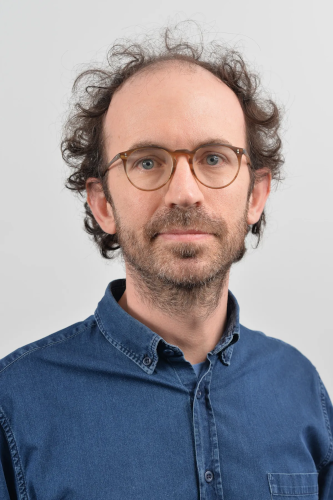
Dr Alex de Mendoza is a Reader in Evolutionary Epigenomics at Queen Mary University of London’s School of Biological and Behavioural Sciences. His group studies how gene regulation evolved, focusing on DNA base modifications and transposable elements. It compares epigenomes across distantly related eukaryotes, mostly non-model organisms and many of them microbial. A recurring question in his work is how genomes deal with their parasites. For example, his lab showed that Amoebidium, a single-celled freshwater parasite closely related to animals, carries a striking amount of DNA from giant viruses in its genome, kept in check by dense DNA methylation. He now holds an ERC Consolidator Grant to study how giant viruses evolve and become part of eukaryotic cells by hijacking gene regulatory processes.
Alex studied Biology at the University of Barcelona, where he did his PhD on the unicellular relatives of animals and the origins of animal multicellularity with Prof. Iñaki Ruiz-Trillo. He then trained as a postdoc with Prof. Ryan Lister at the University of Western Australia, comparing epigenomes of organisms from dinoflagellates to humans, and joined Queen Mary in January 2020. Alongside the Consolidator Grant, his group held a ERC Starting Grant to understand the evolution of cytosine DNA methylation across eukaryotes. He also holds a Wellcome Trust Discovery Award on N6-methyladenine (6mA), a project combining unicellular eukaryotes with mammals and exploring the mark’s biotechnological potential.